
How to Check Criminal History in Armstrong County
No single Armstrong County database answers every criminal-record question. Start with the free Unified Judicial System portal for filed court proceedings. Use the Clerk of Courts for Common Pleas papers that are not online. Call the jail for present county custody, since Armstrong County publishes no official inmate roster. Ask the police agency that made an arrest for its incident report. Use Pennsylvania Access To Criminal History, or PATCH, when a Pennsylvania repository certificate is the right product.
Names can produce false matches. Gather a full name, prior names, date of birth, approximate event date, and any docket, OTN, or police incident number before searching. Then compare the charge-level result and final disposition, not merely the caption.
- Define the record sought: court file, police report, booking record, warrant information, or statewide history.
- Search the UJS portal by participant name and Armstrong County, then narrow by court type and filing date.
- Use an OTN, docket number, or complaint number when it is known, since those identifiers reduce mistaken matches.
- Contact the record creator for the source file: Clerk, arresting police agency, jail, Sheriff, or PSP.
- Request a certified copy or the proper official PSP product when an ordinary public docket is not enough.
Note: A UJS docket, jail booking file, and PSP repository certificate describe different records and should not be treated as substitutes.
Armstrong Criminal Records Have Many Custodians
The Armstrong County justice system works as a chain. Police create reports. The jail creates an intake file after accepting a person. A Magisterial District Court handles the complaint, early arraignment, bail, and preliminary hearing. Charges held for court move to the Court of Common Pleas, where the Clerk keeps the docket and filed papers. PSP receives fingerprint-supported arrest and disposition data for the Central Repository.
This division explains why a countywide name search can miss a recent arrest or a paper filing. It also keeps requests focused. The Sheriff serves warrants and transports prisoners, but does not hold every borough or state-police incident report. The jail can address current custody, but it does not certify the later court outcome. A request aimed at the wrong office may come back with no record even though another custodian has it.
| Question | Best first channel | Useful fallback |
|---|---|---|
| What happened in court? | UJS portal | Armstrong Clerk of Courts |
| Is someone in county custody? | Armstrong County Jail | Focused RTKL request |
| What did police report? | Arresting agency | Agency records officer |
| What does PSP report statewide? | PATCH | Subject Access and Review |
| Is someone in state custody? | PA DOC Locator | PA DOC contact channel |
Official Pennsylvania Background Checks
The Pennsylvania State Police Central Repository offers a standard name-based certificate through PATCH. Any requester may submit the standard check online or by mail for $22. Optional notarization adds $5. A possible match may show “Request Under Review” while staff complete a manual review. That status does not itself mean a criminal record exists.
A person auditing their own full Pennsylvania rap sheet should use SP 4-170 Access and Review instead. It costs $20, goes by mail, requires identification, and includes conviction and non-conviction data available to the subject. PSP warns that processing may take three months or more. Fingerprint-based checks tied to an authorized Pennsylvania program begin with IdentoGO and a program service code. The service code controls the purpose, price, and recipient, so no unverified local retail site should be assumed.
The official PATCH request interface shows how PSP separates a new request from a status check.
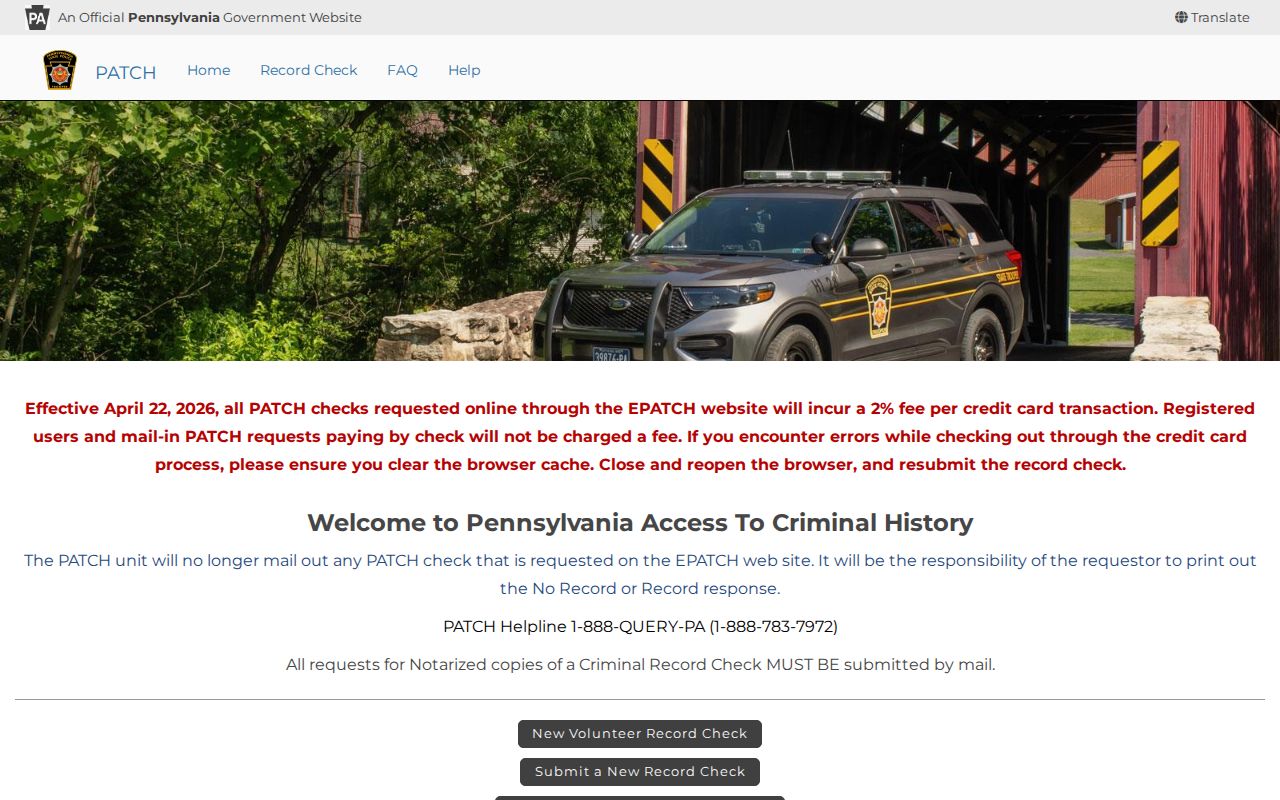
The portal is the Pennsylvania repository route, not an Armstrong County jail roster or a replacement for the local court file.
| PSP product | Fee | Scope and method |
|---|---|---|
| Standard PATCH check | $22 | Name-based Pennsylvania certificate, online or by mail |
| Notarized standard check | $27 | Standard result with PSP notarization |
| Volunteer check | Free | Volunteer form; cannot be notarized |
| Access and Review | $20 | Subject-only complete Pennsylvania record, by mail |
PATCH Fields for Armstrong Record Checks
PATCH works best when the subject details are complete and exact. The request collects requester data and subject identifiers. These can include first, middle, and last name, date of birth, sex, race, Social Security number when supplied, and maiden names or aliases. The online flow creates a control number. Save it with the request date because both are needed to retrieve a pending result.
The PSP overview of PATCH also clarifies what a public result means.
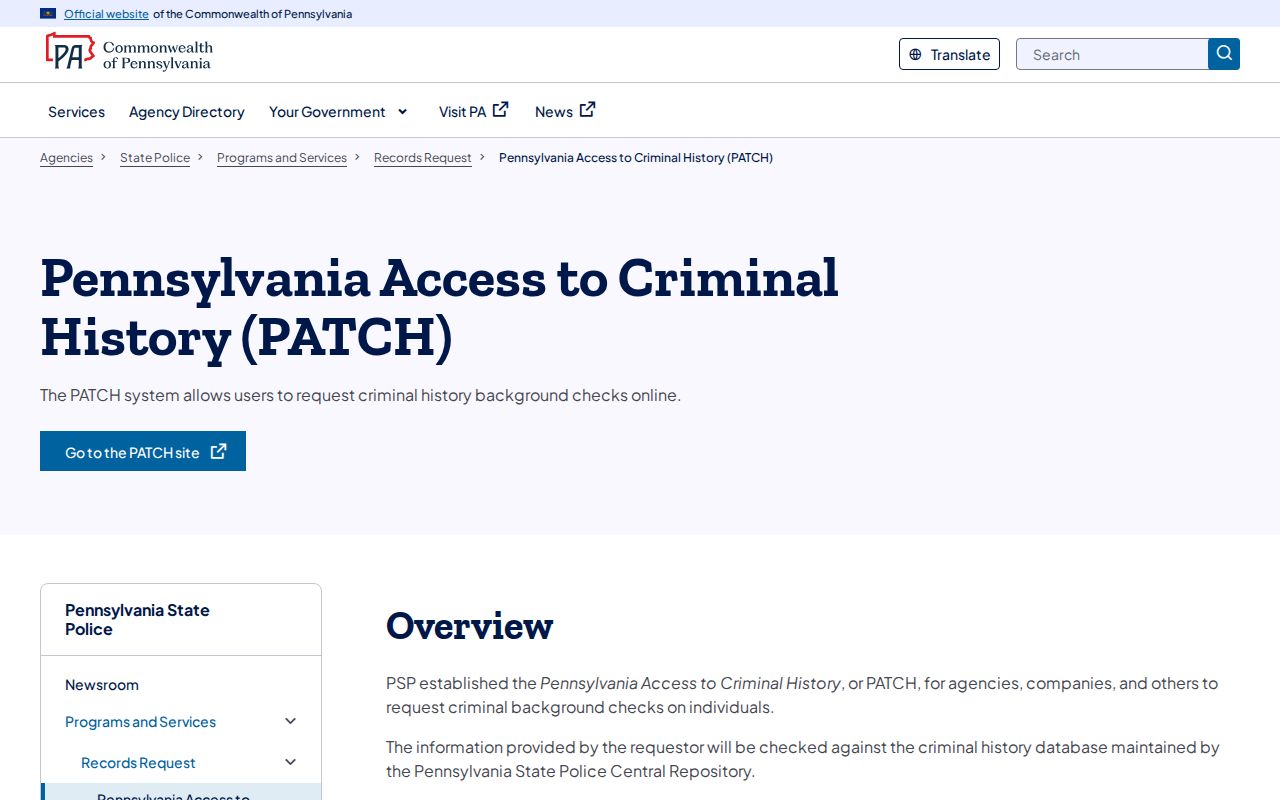
A public certificate is not the subject's full Access and Review file, and it does not include federal records merely because the requester used a Pennsylvania state portal.
| Field | Use | Practical note |
|---|---|---|
| Subject name | Primary match input | Include prior or maiden names when known |
| Date of birth | Narrows identity | Helps separate common names |
| Other identifiers | Supports the repository match | Supply only through the official form |
| Control number | Retrieves status | Keep it with the request date |
| Request date | Status-search key | Required with the control number |
Types of Criminal Records
An incident report records what an officer observed or alleged. A booking record covers intake, identifiers, custody, bail, housing, and release. A criminal complaint begins a court case before a Magisterial District Judge. The Common Pleas file tracks formal charges, motions, pleas, disposition, sentence, and appeals. PSP criminal-history information ties fingerprint-supported arrest cycles to reported outcomes.
Other Armstrong County records have narrower roles. The Sheriff holds material tied to warrant service, prisoner transport, and courthouse security. Adult Probation keeps operational supervision files, while public court entries may show a sentence or violation hearing. The county jail, PA DOC, and federal Bureau of Prisons each cover a different custody system. The Pennsylvania Megan's Law Website is a separate public registry, not a general rap sheet.
- Police record: allegations, incident facts, and agency activity, subject to investigative limits.
- Booking record: one admission to Armstrong County Jail and its custody details.
- Court file: charges filed, events, disposition, sentence, and financial entries.
- Repository history: PSP arrest cycles and outcomes reported to the Central Repository.
- Custody or registry record: current status within the specific system that maintains it.
No Armstrong County Jail Roster
Armstrong County has no verified public online inmate roster. To confirm present county custody, call Armstrong County Jail at 724-545-9222. The facility is at 171 Staley's Court Road in Kittanning, and its administration hours are 8:00 a.m. to 4:00 p.m. on weekdays. Ask for releasable custody or booking information. If a phone answer is not enough, describe the exact booking record sought in a focused county Right-to-Know request.
Custody can move. A person serving a state sentence may appear in the PA DOC Inmate/Parolee Locator, while a federal sentence belongs in the BOP system. The Federal Bureau of Prisons locator provides the federal layer.
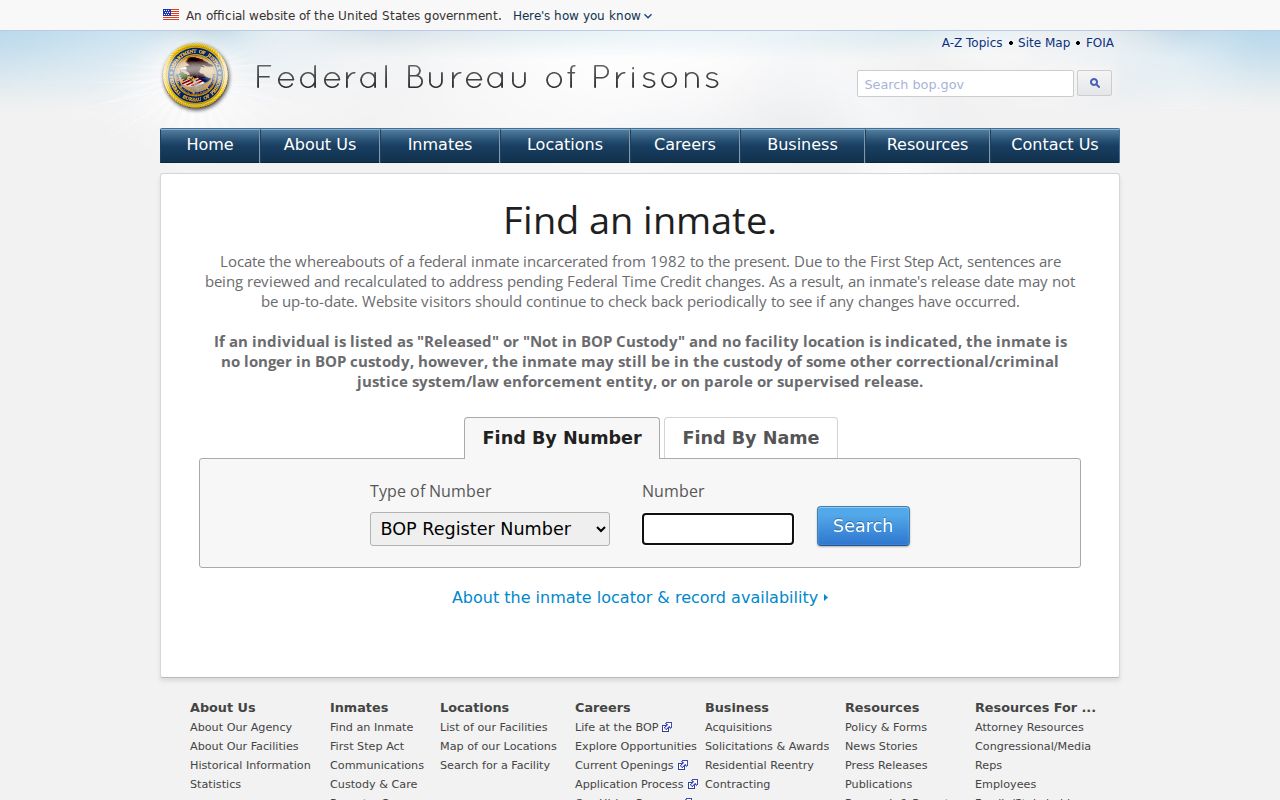
A federal result cannot confirm a local jail admission, just as a county jail call cannot answer whether someone is in Pennsylvania state prison.
Armstrong County Jail
171 Staley's Court Road
Kittanning, PA 16201
724-545-9222
Weekdays, 8:00 a.m. to 4:00 p.m.
Armstrong County Sheriff
500 E. Market Street, Suite 106
Kittanning, PA 16201
724-548-3265
What an Armstrong County Criminal Record Shows
The fields depend on who created the record. A PSP rap sheet is arranged around identity and fingerprint-supported arrest cycles. A Common Pleas docket organizes one case by docket number and event history. The Armstrong County Jail file organizes one admission by booking time and custody status. Readers should compare identifiers and then follow each charge through its final disposition.
| Name and Identifiers | Names, aliases, date of birth, SID or FBI identifiers when held and lawfully released. |
|---|---|
| Arrest and Booking | Arrest date, agency, OTN, booking time, facility, bail, housing, and release data. |
| Charges and Statutes | Offense description, Pennsylvania statute, grade, sequence, and offense date. |
| Disposition | Guilty, dismissed, withdrawn, acquitted, nolle prosequi, or another charge-level result. |
| Sentence | Confinement, probation, costs, restitution, and concurrent or consecutive terms when public. |
| Custody or Supervision | County admission, state custody or parole, and public court supervision events in the relevant system. |
- OTN
- Offense Tracking Number linking an arrest and charging event across Pennsylvania systems.
- Disposition
- The outcome of a charge, which can differ from the charge first filed.
- Limited access
- A rule that hides qualifying records from ordinary public access without necessarily destroying them.
- ARD
- Accelerated Rehabilitative Disposition, a pretrial program that may lead to dismissal and later expungement after completion.
Armstrong Records Span Two Market Addresses
Armstrong County lists its general courthouse at 450 East Market Street and several justice offices by suite at 500 East Market Street. Treat them as a connected courthouse complex, but confirm the right entrance and suite before a visit. The Clerk of Courts occupies Suite 103 at 500 East Market Street. Its counter handles Common Pleas criminal dockets, filings, bail records, appeals, and accounts for fines, costs, and restitution.
The Armstrong County government homepage provides the official courthouse and department context.
The Market Street campus is not the jail. Armstrong County Jail stands on Staley's Court Road, and each location maintains records tied to its own work.
Clerk of Courts
500 E. Market Street, Suite 103
Kittanning, PA 16201
724-548-3252
8:00 a.m. to 4:30 p.m.; closed noon to 1:00 p.m.
Right-to-Know Officer
Commissioners' Office
450 Market Street
Kittanning, PA 16201
Fax: 724-548-3285
Public Access Laws
Public access depends on the custodian and record class. Pennsylvania's Right-to-Know Law covers agency records subject to exemptions and procedure. Judicial files follow UJS public-access rules. The Criminal History Record Information Act, often called CHRIA, governs PSP criminal-history dissemination. None of these rules makes every police investigative file, juvenile record, or protected identifier public.
The practical rule is simple: ask the office that made or keeps the record. Request a Common Pleas file from the Clerk. Ask the arresting agency for its police report. Seek jail booking material from the jail and PSP repository products from PSP. An arrest or complaint remains an allegation unless a later disposition establishes an outcome.
Key access rules:
Pennsylvania Right-to-Know Law presumes agency records open, subject to exemptions and request procedures.
18 Pa.C.S. § 9121 governs dissemination of PSP criminal-history information.
UJS Case Records Public Access Policy protects listed data while providing access through court custodians.
18 Pa.C.S. § 9122 establishes Pennsylvania expungement grounds.
18 Pa.C.S. §§ 9122.1 to 9122.5 provide petition and Clean Slate limited-access rules.
Armstrong Right-to-Know Requests Need Precision
Use the county Right-to-Know path only after identifying the correct executive-agency custodian. A written request should describe the record, subject, event, date range, and desired format. Submit it to the county officer by mail, fax, or in person, or use the email listed on the county page. Pennsylvania agencies generally have five business days to respond or invoke a lawful extension. A denial should state the grounds and appeal rights.
The official Armstrong County Right-to-Know instructions explain local routing.
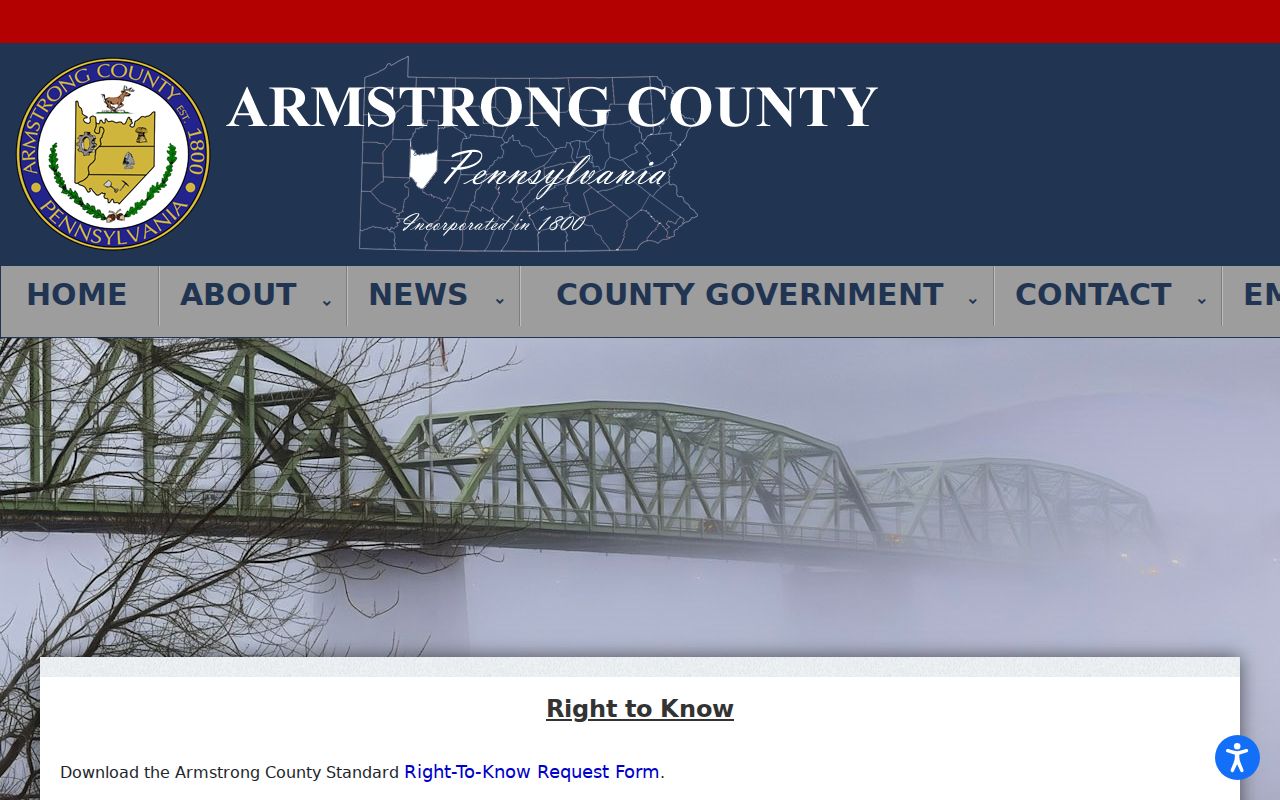
Already-public court records should go straight to the Clerk or the correct Magisterial District Court. Judicial records do not become ordinary county RTKL records merely because the courthouse is county property.
Note: The District Attorney uses a separate open-records officer and publishes a copy charge of $0.25 per page.
Sealed, Expunged & Restricted
Armstrong County public searches exclude or restrict juvenile files, sealed and expunged cases, qualifying limited-access matters, protected victim data, full account and identification numbers, and certain active investigative material. A missing UJS result can reflect restriction, retention rules, a spelling problem, or a reporting delay. It does not prove that no record exists.
Pennsylvania expungement is narrower than a broad promise to erase any conviction. Qualifying grounds can include acquittals, non-conviction outcomes, some summary convictions after the statutory waiting period, certain ARD completions, and convictions followed by an unconditional pardon. Limited access and Clean Slate usually restrict public dissemination rather than destroy all agency copies. Justice agencies may retain authorized access.
An Armstrong County filing starts with an SP 4-170 Access and Review, a check of each docket and OTN, and the correct statewide petition packet. File through the Clerk of Courts, allow notice to the District Attorney, and follow any order through PSP and the contributing agencies. Confirm the current filing fee with the Clerk rather than relying on an unreadable scanned schedule.
Three Custody Systems Serve Armstrong
County, state, and federal custody searches are separate. Armstrong County Jail covers local admissions, pretrial detention, and some county sentences. PA DOC covers state prison and parole records. The Bureau of Prisons covers federal custody. Searchers should not infer release merely because a name vanishes from one of the three. A transfer can move the record to another system.
The Pennsylvania county probation and parole directory shows how local supervision differs from state parole.
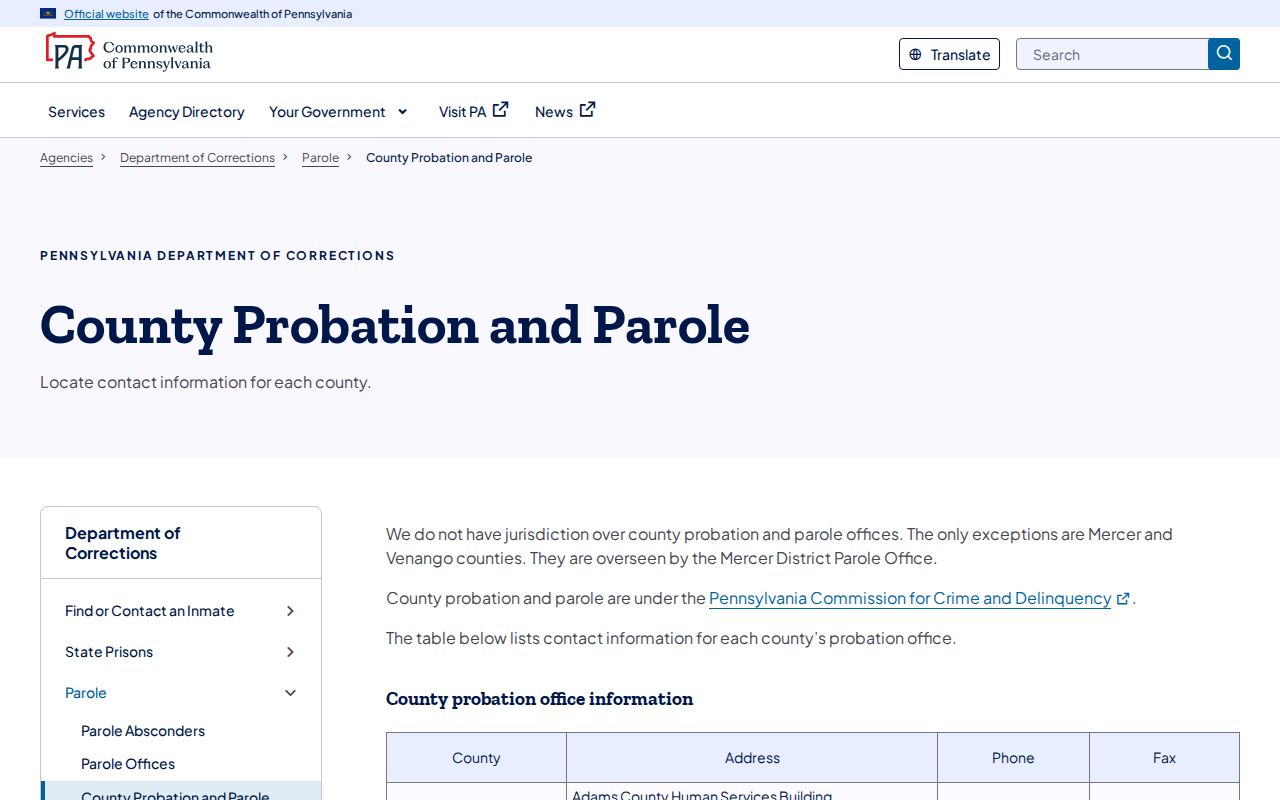
Armstrong County Adult Probation supervises county cases from the courthouse, while the Pennsylvania Parole Board and PA DOC handle state release and field supervision functions.
For a federal identity record, the FBI electronic request channel accepts subject-only Identity History Summary requests with fingerprints.
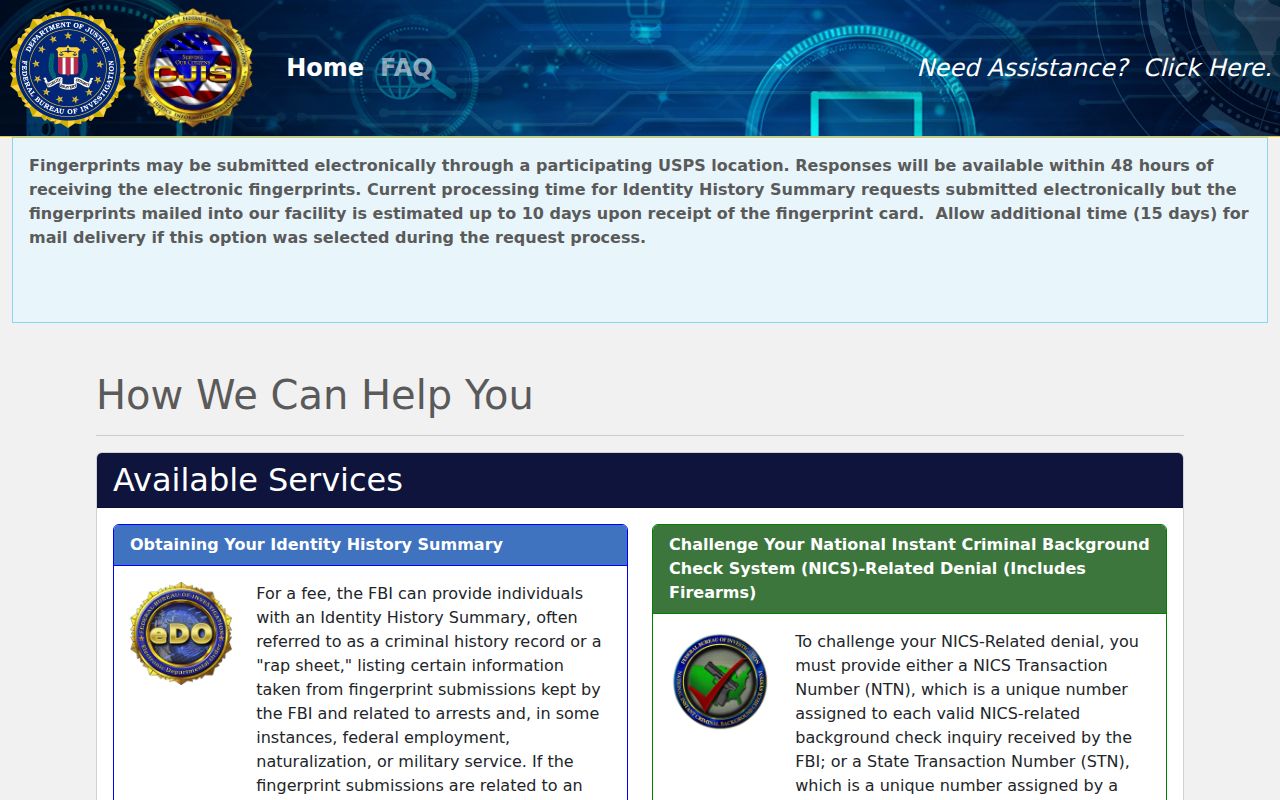
That fingerprint process is an identity-history request, not a public name search for another person.
Criminal Records by City in Armstrong County
Local police reports begin with the agency that served the borough, while court cases route through Pennsylvania Magisterial District Courts and then Common Pleas when charges are held for court. Kittanning uses borough police and MDJ 33-3-02. Ford City has used Southern Armstrong Regional Police since 2023 and routes cases through MDJ 33-3-01. Leechburg police records begin at the Borough Building, with court matters at MDJ 33-3-03.
Kittanning Criminal History
County seat with borough police, the Market Street court campus, and MDJ 33-3-02.
Ford City Criminal History
SARPD serves the borough; MDJ 33-3-01 handles its lower-court cases.
Leechburg Criminal History
Borough police and MDJ 33-3-03 provide the primary local record channels.
Armstrong's Old Jail Holds Records
Armstrong County's records landscape has a literal link to its jail history. The old stone jail was built from 1870 to 1873 with a covered passage to the courthouse. Its castle-like design included thick walls, a tall tower, and two dozen cells. The building now serves as the county Records Center and information-technology space, while the current jail opened in 2003 at a separate Kittanning site.
The courthouse itself followed an 1858 fire. The present Greek Revival building rose from 1858 to 1860 at the end of Market Street. Those changes help explain why historical material, current court filings, and live custody data may occupy different buildings and systems. Genealogy or old-case research can require a records-center or clerk inquiry even when a current UJS search is the usual first step.
Note: County pages use both 450 and 500 East Market Street, so preserve each department's published suite address when planning a request.